Football Is Not An Asset Class. Yet.
 Today I Feel.... Greedy
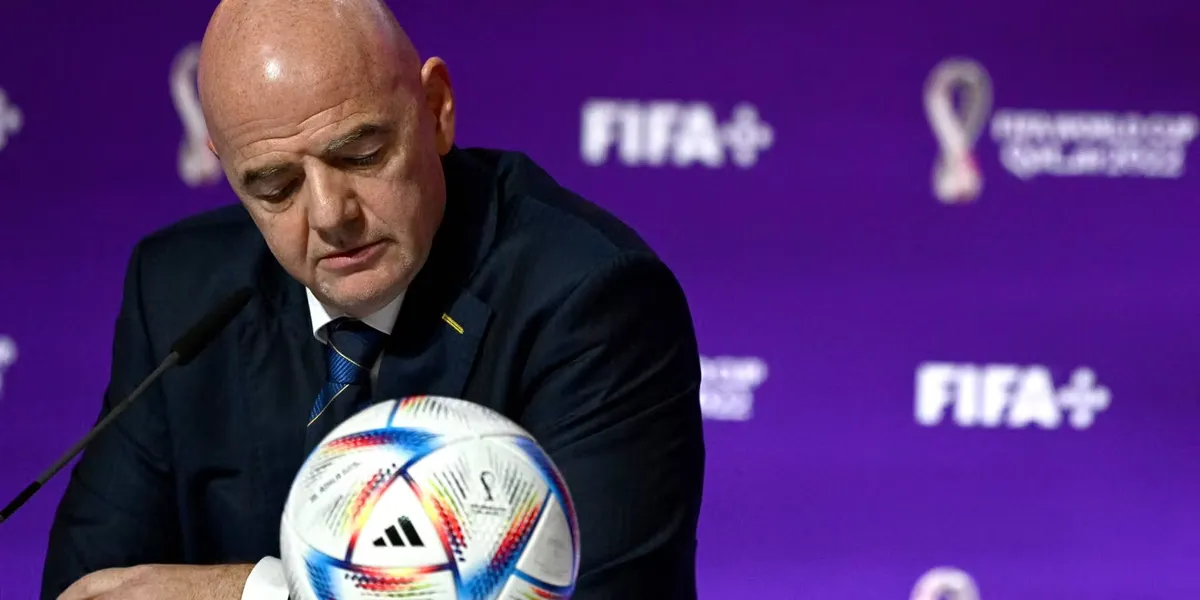
Last Tuesday, Gianni Infantino (Infantile) announced FIFA Forward Enterprise. A new commercial subsidiary that would take over the World Cup and FIFA's other events, valued at $20 billion, with 20% sold to private investors led by Joshua Kushner's Thrive Capital.
By Friday, it was dead. Four days. Even by the standards of bad ideas, that is a fast collapse.
FIFA, for those keeping score at home, is a non-profit registered under Swiss law. It has 211 member federations. It has no shareholders. It has, in structural terms, nothing to sell. Which is presumably why Infantino invented something to sell, packaged it in a subsidiary, and routed the equity to a venture fund. Non-profit governance is a puzzle. You just have to be creative.
The pitch was that FFE would democratise football. This is a curious use of the word democratise, given the plan involved selling minority equity in the World Cup to one specific venture fund run by the family of the sitting US president. But sure. Democratise.
The obvious question, which nobody at FIFA wanted asked, is why a non-profit sitting on around $4 billion in reserves and coming off $15 billion in World Cup revenue needs private capital at all. Infantino currently earns about $6 million a year, which is the pay of a non-profit executive who has just run the most commercially successful World Cup in history. The Times reported he was set to receive €30 million plus bonuses under FFE, in a commissioner-style role modelled on the NFL's Roger Goodell. Goodell earns around $60 million. Presumably that gave Gianni something to aspire to although publicly denied he would personally benefit. I mean €30 isn't really a big enough number to be called a "benefit".
The mechanism for getting this past the members was the fun part. Each of the 211 federations was offered a one-off $20 million payment, escalating across cycles. According to The Times, federations that backed the plan were offered €35 million. Federations that opposed it, €9 million. Deadline to accept: 19 September.
For a small federation with no domestic broadcast market and, in some cases, no domestic anti-corruption norms, $20 million is transformative. The lower-ranked members were always going to vote yes. That was the whole design. Buy the tail, ignore the head, count the votes.
The head declined to be ignored. UEFA, then CONCACAF, then the AFC, then a chunk of FIFA's own staff, called it what it was. Even Infantino's handpicked senior adviser resigned in protest. UEFA threatened a World Cup boycott. Four days later, FFE was quietly buried.
Credit where it is due. This is the third time in five years that European football has stopped a bad idea by threatening to walk away. The Super League died in 72 hours in 2021. The biennial World Cup died the same year. FFE lasted four days. There is a pattern here, and Infantino keeps failing to notice it.
Which brings us to the part FIFA does not want to discuss. FIFA has never had a capital problem. It has a where-does-the-money-actually-go problem. $15 billion in, and small federations are still willing to sell their vote for a one-off cheque. That is a governance failure, not a funding shortfall. Selling minority equity to a fund that needs a return does not solve it. It makes it worse, because the money now has to flow to investors before it flows to anyone else.
Football is for the people who play it, watch it, coach it, and organise it in places where it barely has a pitch. FIFA exists to serve that game. That is the entire basis for the non-profit status and the tax treatment that comes with it. The moment FIFA stops doing that, the status is a tax dodge.
The only credible way forward is for Infantino to resign. I don't know who replaces him. UEFA does not know either. But it is not the man who just tried to sell the World Cup to his friend's brother.
FIFA is not for sale. Yet.