The Best And Worst Time To Be Alive
This is the best time to be alive. It is also the worst.
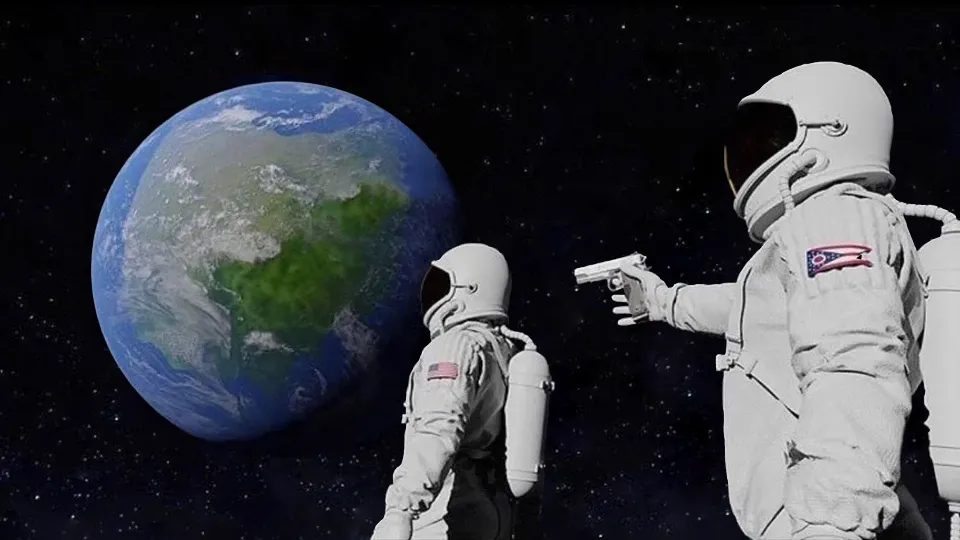
I do not mean that as a hedge, and I am not building towards a tidy resolution where one of them wins. Most eras pick a lane. Ours has refused. Almost every genuinely good thing happening right now runs on the same machinery as one of the genuinely bad ones, which makes the usual move of choosing a side feel like a category error. Here is my ledger.
The Case For Best
Medicine has started doing things that sound made up.
Last week Moderna and Merck reported that their personalised mRNA cancer therapy hit its primary endpoint in a Phase 3 trial. Over eleven hundred melanoma patients, tumours already removed, randomised to get the therapy plus Keytruda or Keytruda alone. It worked. Recurrence slowed. Spread slowed. It is the first time an individualised mRNA cancer treatment has cleared a late-stage trial.
Read the mechanism and try to keep a straight face. They sequence your specific tumour, identify up to 34 mutations unique to it, and manufacture a bespoke mRNA instruction set for your immune system. One patient, one batch. A drug written to order.
Space stopped being a spectator sport.
I am a space nerd and I love the mystery and the magic of it.
The numbers this decade are ridiculous. The world attempted more than 320 orbital launches in 2025, a fifth consecutive record year and a 25 per cent jump on 2024, which had itself jumped on 2023. For scale, the busiest year of the entire Apollo era was 1968, at 128 attempts. We now reach orbit at more than twice the rate of the space race, and almost nobody notices. A record 4,517 satellites went up last year, about 58 per cent more than the year before, and nearly nine in ten of them were commercial.
The reason is price. Putting a kilogram into low Earth orbit cost somewhere around 54,000 dollars on the Space Shuttle. On a reused Falcon 9 it is closer to 3,000. That is a 90-plus per cent cut inside a single working career. Nothing in heavy industry moves like that. Every sentence about space that used to begin with "we cannot afford to" now begins with "how many".
And then in April, four people flew around the Moon.
Artemis II launched on the first of April and splashed down ten days later. First crewed lunar mission since 1972. At their furthest the crew were 252,756 miles from Earth, the greatest distance any human has travelled, breaking a record set by Apollo 13 in 1970. The previous record was set by accident, during an emergency that nearly killed three men. We broke it on purpose, on a schedule, and the crew spent the trip taking photographs of the Earth setting behind the Moon.
That was four months ago. It trended for roughly a day.
The essay's own argument shows up here too, incidentally. That launch cost about 2.5 billion dollars, on a rocket programme that has run to something like 31.6 billion. A few kilometres down the coast, a company lands its boosters and flies them again twenty-five times. Both of those things are the state of the art. They are happening simultaneously, in the same industry, on the same beach.
I am not interested in the escape hatch version of this. The idea that space is a backup planet for people who have finished with this one is the least interesting thing about it and it puts me off. What gets me is smaller and stranger. We can now point instruments at planets orbiting other stars and say something credible about what their atmospheres are made of. A species that cannot agree on a tax code is doing spectroscopy on other worlds.
It is also, notably, one of the few genuinely hard things we still attempt on purpose, at scale, in public.
Energy is quietly working.
Nobody posts about this because it involves infrastructure and infrastructure has not been made into a personality yet. The world installed 664 gigawatts of solar in 2025. The global solar fleet passed three terawatts in early 2026, having tripled in four years. The first terawatt took about seventy years.
In 2025 renewables overtook coal in global electricity generation for the first time in the modern power system. Fossil generation did not rise. That has happened five times this century.
This is the single most underrated fact of the decade and it competes for attention with someone arguing about a hat online.
Convenience has gone completely feral.
I can have anything delivered. I can watch anything. I can be driven anywhere by someone I have never met, in a car I do not own, paid for by a number I have never typed in. I do not need a car. Some weeks I do not strictly need a front door.
Errands used to give a weekend its shape. Post office, hardware shop, bank, video store, someone's house to return the thing you borrowed. That was Saturday. All of it is now a sequence of taps that takes ninety seconds, and I could not tell you where the reclaimed time went. It did not turn into anything. It was simply absorbed.
This is either the peak of human civilisation or a very comfortable form of sedation.
Borders got thinner.
I grew up in India and moved to Sydney in 2007. The distance between those two facts used to be enormous. It is now a video call and a fourteen-hour flight I can book on my phone while walking. More people are travelling than at any point in history, and travel does the thing travel does, which is make it harder to hold a stupid opinion about a place you have been.
COVID was a catastrophe that accidentally left one useful thing behind. Working from anywhere stopped being a perk and became a default. That is a permanent structural gift and we got it by accident, which is very on brand for us.
One person can now build things.
This one is personal. Historically, to make something and put it in front of the world, you needed a factory, a distributor, and a bank that liked you. Now you need a laptop and time. The gap between having an idea and having a thing has collapsed to weeks or in some cases, a weekend. Most of what gets built this way is rubbish. That is fine. The base rate of new ideas has always been rubbish. What matters is that the gate is gone.
The case for worst
The climate, obviously.
Australia has warmed by about 1.51 degrees since national records began in 1910. The very hot months that used to happen two per cent of the time between 1960 and 1989 now happen about eleven per cent of the time. By 2070 metropolitan Sydney could see more than double the number of days over 35 degrees.
I have been in Sydney almost twenty years. I did not need the Bureau to tell me. You can feel it happening.
Everyone agrees. Everyone knows. The trajectory has not meaningfully changed. We have collectively decided this is a problem for a future person, who will be extremely annoyed with us and correct to be.
Technology, which is why it is also on the other list.
The five biggest US technology spenders are committing somewhere north of 600 billion dollars in capital expenditure this year alone, part of an estimated 2.1 trillion dollar deployment across 2026 to 2028. That pushes capex intensity to 34 per cent of revenue, more than double the peak of the dot-com build-out. JPMorgan's own numbers put 28 AI-linked names at roughly half the market cap of the S&P 500.
That is the retirement savings of everyone reading this, in one trade, in a small number of buildings full of chips that depreciate.
Meanwhile the labour side is already moving. Challenger, Gray and Christmas found AI was the single most-cited reason for US job cuts in March and April this year, the first time a technology has topped that list. The Stanford work on entry-level hiring is worse in a quieter way. The jobs disappearing first are the ones people used to learn on. We are removing the bottom rung and telling everyone to climb.
Nobody has a plan. There are white papers and some loose legislation.
Nobody asked the neighbours.
Here is the arrangement we have quietly agreed to. The returns are private. The costs are municipal. If a project makes money it belongs to the shareholders, and if it makes heat, noise, traffic and a larger power bill, that belongs to whoever happens to live nearby.
Data centres are the cleanest current example, partly because they are enormous and partly because they are being built where I live. As at March this year NSW had 44 data centres in the development pipeline totalling 11.4 gigawatts. That is roughly four Eraring power stations, and Eraring is the biggest coal station in the country.
One proposal on Mamre Road in Western Sydney would be among the largest data centres on earth. Six four-storey buildings. 936 cooling units. 852 diesel backup generators and 14.4 million litres of diesel sitting on site. At full capacity it would be the single biggest energy user in Australia, ahead of the Tomago aluminium smelter.
Western Sydney already runs up to ten degrees hotter than the rest of the city. These buildings vent between 35 and 45 degrees, day and night, permanently. Sydney Water has warned that data centre water use in this city could reach 250 million litres a day by 2035, and S&P reckons the sector could take 10 per cent of Australia's electricity by then, up from about 2 per cent now.
If you want to know where that lands, look at America, which is about three years ahead of us. PJM runs the largest grid in the US. Its capacity auction cleared at $28.92 per megawatt-day for 2024/25. For 2026/27 it cleared at $329.17. The following year it hit the regulatory cap. Those costs flow to households, and households have noticed. Bills in parts of Maryland, Ohio and Washington DC rose by 16 to 21 dollars a month.
A Gallup survey in March found about 70 per cent of Americans oppose a data centre being built in their community. That is higher than opposition to nuclear power plants. People would rather have a reactor.
I want to be careful here, because I am not a bystander. I work in data. My livelihood runs on those buildings existing. I am not arguing they should not be built. I am arguing that a windowless shed with no staff and no obligation to speak to anyone should not be able to raise your power bill, warm your suburb and drink your water while the upside is booked several thousand kilometres away. Nobody asked. The consultation, where it happens, happens after the deal.
That is the pattern, and it is not really about data centres. It is that profit now arrives first and everything else is a cost to be allocated to someone with less legal representation.
The wars do not stop.
The Uppsala Conflict Data Program recorded 65 active state-based armed conflicts in 2025. That is the highest since records began in 1946. Conflicts between states doubled for the second consecutive year, to eight, also a record. Thirteen of them met the threshold of war, and fatalities from organised violence jumped to 244,600, up from roughly 187,000 the year before, driven largely by mass violence against civilians in Sudan.
The Global Peace Index has now deteriorated for twelve consecutive years. The estimated economic cost of violence in 2025 exceeded 20 trillion dollars, about 10.5 per cent of global GDP.
None of these wars end. They just leave the news cycle, which most of us have quietly agreed is the same thing.
Everything costs more than it should and someone is doing very well out of that.
I am not naming companies. You know the ones. Prices went up during the supply shock and then declined to come back down, which turns out to be a business model rather than an accident.
The clearest version of this is housing. Sydney is the second least affordable housing market on earth out of 94 measured, behind only Hong Kong. Depending on whose methodology you trust, the median dwelling here runs somewhere between ten and fourteen times median household income. The methodological disagreement is doing a lot of work in that sentence and none of the available answers are good.
I bought into this market. That does not make me relaxed about it. It makes me one of the last people through a door that has since been welded shut behind me, which is a worse feeling than it sounds.
The subscriptions.
Australians now spend 26.5 billion dollars a year on subscriptions. Streaming alone averages 44 dollars a month per person, and seven in ten of us pay for more than one service. Eleven per cent pay for five or more.
Subscription was supposed to be the cheap option. That was the entire pitch. We unbundled cable, and then twelve companies re-bundled it individually, at a markup, with worse search.
At some point paying monthly for convenience stops being convenient and becomes a second set of utility bills you cannot itemise from memory. Oxygen is coming. Basic tier with ads.
Money decides, and the referee has gone home.
Roughly one in six dollars spent in the 2024 US federal election cycle came from about 100 billionaire families. Billionaire political spending is up around 160-fold since the Citizens United decision in 2010. The arithmetic underneath is the part that stays with me. The families in that analysis held about 2.67 trillion dollars between them, so their political giving amounted to roughly 0.07 per cent of their wealth. For a median household, an equivalent donation would be about 140 dollars. A handful of people now carry the political weight of more than 13 million families, for less than the cost of a decent dinner, proportionally.
Before anyone gets comfortable, we are not clean either. Australia's major parties reported 417 million dollars in donations and other receipts in 2024-25, up 58 per cent on the previous election cycle. The federal disclosure threshold is currently just over $17,300, meaning anything below it never gets a name attached to it. Analysis over recent years has put the share of major party income with no declared source somewhere between a quarter and 45 per cent depending on the year.
And we find out who funded an election about nine months after it has been decided. The transparency exists. It is just scheduled for after the result, like a receipt for something you cannot return.
The thing that is meant to catch this is the press, which brings me to the second half of the problem.
The Reuters Institute surveyed close to 100,000 people across 48 countries this year. Trust in news sits at 37 per cent, the lowest since they started measuring in 2015. It fell in 38 of the 48 countries. News avoidance is at 42 per cent, up from 29 per cent in 2017. For the first time, social media and video platforms are the most widely used source of news globally.
Which would be tolerable if people trusted the replacement. They do not. Trust in news through search sits at 32 per cent, through social media 22 per cent, through AI chatbots 20 per cent. We abandoned institutions we did not trust in favour of channels we trust considerably less.
I do not think proprietors having agendas is new. Mastheads have had owners with opinions for two hundred years and everyone knew whose paper they were reading. What has changed is that the number of people who think an honest account is even possible has collapsed. That is the useful bit, if you are the one with the money. You never have to buy the truth. You only have to fund enough noise that nobody thinks there is one, and then the whole question of who paid for what stops being interesting to anybody.
The genuinely sad finding in that report is that people still say impartiality matters to them. They want the thing. They have concluded they are not going to get it.
We are the most connected humans in history and it is killing us.
This one belongs directly underneath the connectivity entry on the other list, which is why I have put it here.
The WHO's Commission on Social Connection found that roughly one in six people worldwide are affected by loneliness, and that loneliness is associated with more than 871,000 deaths a year. That is about 100 an hour. It is worst among adolescents and young adults, the most connected cohort ever produced.
We built infrastructure that lets anyone reach anyone, instantly, forever, and the measurable result is a body count comparable to a mid-sized war. I do not think the technology caused all of it. I do think we should notice that we optimised hard for contact and got isolation.
What I Actually Think
The two lists are not separate. That is the point. Almost every item in the best section has a shadow directly beneath it in the worst section, drawn by the same hand. Connectivity gave us the world and took away the neighbours. AI is going to cure diseases and is currently eating the first ten years of a lot of careers. The same buildings that will run the model that finds the next cancer treatment are warming a suburb that was already the hottest part of the city. Convenience means I never have to leave the house, and increasingly I do not.
The pattern under all of it is the same. We are extremely good at building the thing and extremely bad at deciding who pays for it. That is not a technology problem. It is a question of who gets a say, and the answer has been narrowing for about forty years.
So which is it. Both. Genuinely both, at full strength, at the same time.
I want the Star Trek ending. Post-scarcity, mostly beige, everyone reasonable. Worth remembering how Star Trek's own timeline gets there. It requires a third world war and 600 million dead before anyone gets round to inventing the replicator. Even the optimists built in a catastrophe first. They could not imagine us cooperating on the way up, only on the way back.
That is my problem with the utopian read. Not the technology. We are going to build the technology. We are extremely good at building the technology. The bottleneck has never been capability, it has been whether several billion people can agree on anything for longer than a news cycle, and the evidence there is not encouraging.
Space is the one place where we still routinely do the hard thing on purpose. Long timelines, public failure, no immediate payoff, thousands of people cooperating on something none of them will personally use. We are demonstrably capable of it. We just seem to need a launch window to make it happen.
I would love to be wrong. I have a decent record of being wrong about the pessimistic call and I would happily extend it. Until then, I am holding on to my point of view.